Automatic gate repair in Los Angeles
Diagnostics and repair for gates that stop, reverse, grind, move slowly, sag, drag, or will not respond.
Gate repair in Los Angeles for automatic sliding and swing gates, motors, openers, intercoms, safety sensors, access controls, installation, and preventive maintenance. Call one direct service number to discuss the problem, the property, the operator brand, and the current Los Angeles route availability.
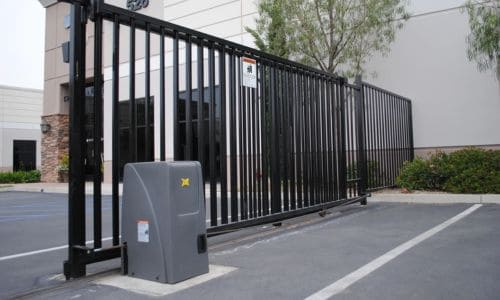
A gate company in Los Angeles should understand that an entrance is part of the property’s security, privacy, and daily routine. Our service approach is built around values experienced homeowners recognize: answer the phone clearly, respect the home, diagnose before replacing equipment, explain the practical choices, and test the complete system before leaving.
We work with automatic gates at private homes, hillside and canyon properties, apartment buildings, gated communities, commercial entrances, and managed parking facilities. The goal is a repair that makes sense for the way the property is actually used—not a colorful sales pitch or a list of parts changed by guesswork.
Automatic gate repair in Los Angeles should begin by identifying why the gate stopped—not by replacing the most expensive visible component. When an electric gate stops midway, reverses without a clear obstruction, drags, grinds, or ignores the remote, a weak battery can look like a bad board, a dragging gate can overload a healthy motor, and a failed photo eye or loop detector can prevent closing even when the operator is working.
Our Los Angeles gate repair process separates mechanical resistance, incoming power, low-voltage safety circuits, access-control commands, and operator faults. We inspect the frame and travel path, then test hinges or wheels, chains and racks, limits, controls, monitored entrapment devices, emergency release, and the operator under load.
Repairs may include gate alignment, roller or hinge replacement, chain and rack service, control-board diagnostics, limit repair, wiring correction, battery replacement, sensor alignment, loop-detector testing, remote programming, and operator component replacement. The completed system is cycled repeatedly so opening, closing, stopping, reversing, and access commands can be verified together.
Gate repair services in Los Angeles must account for the entire entrance. One automatic gate can combine steel fabrication, moving hardware, 120-volt power, low-voltage controls, radio receivers, vehicle detection, and monitored safety equipment. The service plan should consider all of it.
Diagnostics and repair for gates that stop, reverse, grind, move slowly, sag, drag, or will not respond.
Control boards, capacitors, gearboxes, limit assemblies, arms, chains, belts, power supplies, and operator wiring.
Matched residential and commercial-duty operators with safe travel limits, monitored sensors, and emergency release.
Track cleaning and correction, V-groove wheels, rollers, chains, racks, guides, stops, and operator alignment.
Hinges, posts, actuator arms, underground operators, stops, geometry, dual-gate synchronization, and locks.
Planning, fabrication coordination, operator setup, access controls, safety devices, and final testing.
Troubleshooting and installation for call boxes, directory systems, keypads, RFID, cellular entry, and smartphone access.
Photo eyes, monitored edges, vehicle loops, loop detectors, shadow loops, exit loops, and obstruction testing.
Repairs for frames, brackets, hinges, wheel boxes, stops, guides, posts, latches, and operator mounts.
Cleaning, lubrication, fastener checks, chain tension, battery tests, limits, force, safety devices, and wear reporting.
High-cycle sliding, swing, barrier, and parking gates for apartments, HOAs, warehouses, offices, and managed properties.
Charging diagnostics, batteries, panels, regulators, DC operators, outage operation, and emergency access checks.
Electric gate installation in Los Angeles begins with geometry, structural load, daily use, and security requirements—not a motor catalog. We evaluate the clear opening, driveway grade, available run-back or swing space, gate weight, wind exposure, expected cycles, emergency access, power, vehicle approach, and pedestrian traffic before matching an operator.
Installation planning can include posts and foundations, frame and hardware choices, conduit, dedicated power, battery backup, monitored photo eyes or edges, vehicle loops, keypad or intercom placement, radio controls, locks, and manual release access. Sliding and swing gates require different safety zones, and dual gates require accurate synchronization and stops.
For replacement projects, we determine which existing components remain serviceable and which should be corrected. Reusing a misaligned track, weak hinge, damaged conduit, or poorly positioned sensor can shorten the life of a new operator. The finished system should open smoothly, close securely, respond consistently to every authorized device, and stop or reverse as designed.
Discuss an installation (747) 302-2777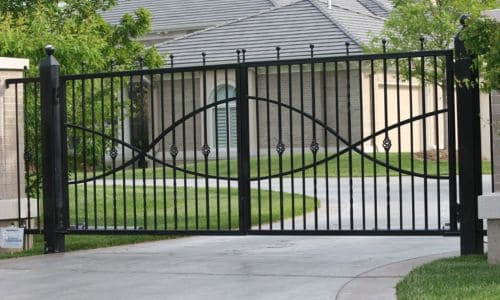
Gate motor repair in Los Angeles starts by testing the operator under the gate’s real mechanical load. A motor cannot be diagnosed correctly while a dragging frame, tight hinge, damaged wheel, loose chain, or misaligned rack is forcing it to work beyond normal conditions.
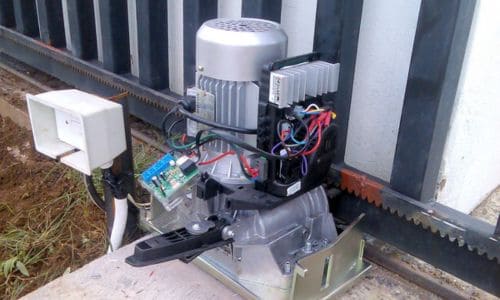
We test supply voltage, batteries, charging, capacitors, current draw, controls, limits, gearboxes, chains or arms, radio commands, and safety inputs. The motor is evaluated under the gate’s real mechanical load.
New equipment is selected for gate type, weight, length, duty cycle, wind load, geometry, and required accessories. Controls and entrapment devices are configured as part of the system.
Cleaning, lubrication, chain tension, hinge or roller inspection, battery load testing, enclosure checks, limits, loop response, photo eyes, safety edges, and emergency release are reviewed on a repeatable schedule.
Gate access control repair in Los Angeles is necessary when the gate can move but residents, guests, staff, or vehicles cannot use the entrance reliably. Calls may not reach residents, keypads may accept codes inconsistently, receivers may lose range, loops may miss vehicles, or an exit command may hold the gate open. We trace commands from the user device through the controller and into the operator.
Telephone entry, cellular call boxes, directories, keypads, card and RFID readers, remotes, smartphone controls, timers, and fire-access integrations.
Presence, shadow, safety, and free-exit loops; loop detectors; probe sensors; placement; sensitivity; wiring; and hold-open logic.
Monitored photo eyes, edges, operator inputs, obstruction behavior, safe zones, warning devices, and final functional testing.
Automatic gate operator service in Los Angeles requires more than recognizing a logo. The model, voltage, control generation, accessories, duty cycle, gate geometry, and mechanical load determine which diagnostic steps and parts are appropriate.
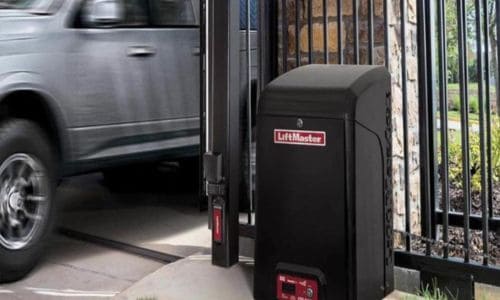
Original manufacturer parts are preferred when they are available and correct for the model. Where equipment is discontinued, we explain compatible professional-grade repair or replacement paths before work begins.
LiftMaster gate repair in Los Angeles covers lA400, LA500, CSL24, CSW24, RSL12, SL3000, barrier arms, myQ accessories, boards, batteries, and monitored safety devices.
We check the operator model, incoming power, battery and charging circuit, limits, monitored safety inputs, control board, drive hardware, and the actual load created by the gate before recommending parts.
Call about LiftMaster (747) 302-2777DoorKing gate repair in Los Angeles covers slide and swing operators, 6000 and 9000 series systems, telephone entry, keypads, receivers, loop detectors, and access-control components.
DoorKing systems often combine the gate operator with telephone entry, vehicle detection, resident access, and timed hold-open commands. We trace the complete command path instead of treating each device as an unrelated problem.
Call about DoorKing (747) 302-2777FAAC gate repair in Los Angeles covers hydraulic and electromechanical swing operators, slide systems, control boards, pumps, valves, arms, and underground assemblies.
FAAC hydraulic and electromechanical equipment requires careful attention to gate geometry, hinge resistance, operator mounting, hydraulic condition, limits, controls, and entrapment protection.
Call about FAAC (747) 302-2777Viking gate repair in Los Angeles covers residential and commercial slide and swing operators, VFlex controls, batteries, gearboxes, limit systems, and accessories.
Viking diagnostics include batteries and charging, VFlex controls, limit operation, mechanical drive components, accessory inputs, and the gate resistance that can overload an otherwise serviceable operator.
Call about Viking Access (747) 302-2777Nice and HySecurity gate repair in Los Angeles covers apollo, HySecurity and Nice controls, solar-ready DC operators, hydraulic systems, entrapment devices, and access accessories.
Nice, Apollo, and HySecurity systems range from residential solar equipment to demanding commercial operators. The repair plan is matched to duty cycle, power system, gate load, controls, and safety devices.
Call about Nice and HySecurity (747) 302-2777All-O-Matic gate repair in Los Angeles covers sL and SW series operators, gearboxes, chains, limit assemblies, control boards, batteries, receivers, and loop equipment.
All-O-Matic service starts with the mechanical drive, gearbox, chain or swing geometry, then moves through limits, controls, batteries, receivers, loops, and monitored safety circuits.
Call about All-O-Matic (747) 302-2777Ramset and Eagle gate repair in Los Angeles covers slide and swing gate operators, mechanical drive components, control electronics, limit hardware, and compatible access devices.
Ramset and Eagle equipment is evaluated as a complete entrance system, including the frame, track or hinges, operator mounting, drive parts, controls, limits, receivers, and safety accessories.
Call about Ramset and Eagle (747) 302-2777Gate access control repair in Los Angeles covers linear, Sentex, CellGate, AES, Security Brands, Knox, remotes, card readers, keypads, and cellular entry equipment.
Access-control problems can originate at the resident directory, cellular connection, keypad, receiver, vehicle loop, timer, wiring, controller, or operator input. We follow the signal from the user device to the moving gate.
Call about Linear, Sentex and access-control brands (747) 302-2777Automatic gate service in Los Angeles must be matched to the way the gate moves. Gate style determines the loads, pinch points, clearances, operator geometry, and safety layout. A repair that works for a light residential swing gate may be wrong for a long cantilever frame or a high-cycle apartment slider.
Single and dual leaves, articulated arms, linear actuators, underground operators, hinge service, stops, and locks.
V-track, rear-pipe, chain-driven, rack-driven, and telescoping systems with wheels, guides, rollers, and catch posts.
Trackless openings using counterbalanced frames, support rollers, guide assemblies, structural pads, and commercial operators.
Fast-opening systems for restricted sites, including pivot hardware, counterweights, controls, and safety zones.
Space-saving pairs for short driveways, synchronized arms, hinges, guides, limits, and entrapment protection.
Arms, springs, cabinets, loops, ticket/access integrations, safety devices, and high-cycle preventive maintenance.
Los Angeles covers more than 460 square miles between the Pacific coast, the basin, and multiple mountain ranges, so gate access conditions vary block by block.
Steep canyon drives, narrow urban lots, long estate entrances, alleys, coastal exposure, and high-cycle shared access can change operator load, mounting, sensor position, emergency access, and the practical choice between swing and sliding equipment.
We service single-family homes, hillside estates, apartment buildings, HOAs, commercial sites, and managed parking entrances. Usage, security needs, vehicle flow, and management requirements shape the solution.
Heat, coastal air, dust, grade changes, heavy custom gates, and frequent daily cycles all change how a reliable repair should be planned. We check the gate under real operating conditions instead of treating one symptom in isolation.
Areas covered around Los Angeles: Hollywood Hills, Bel Air, Brentwood, West Los Angeles, Silver Lake, Los Feliz, Hancock Park, the San Fernando Valley, and communities throughout LA County, plus nearby parts of Los Angeles County.
Choosing an automatic gate in Los Angeles requires balancing privacy, security, driveway geometry, vehicle flow, appearance, maintenance, and safe emergency access. The most expensive operator is not automatically the correct operator for a particular entrance.
Swing gates need a clear arc and stable hinge geometry. Sliding gates need run-back space and clean guidance. Cantilever gates avoid ground track but require a longer, structurally sound frame. Operator capacity should include gate weight, length, wind exposure, slope, and expected cycles.
Powder-coated steel is strong but must be protected where salt or irrigation is present. Aluminum reduces weight and corrosion concerns. Wood provides privacy but changes weight as it weathers. Hardware, fasteners, conduits, cabinets, and drainage deserve the same attention as the visible gate.
Battery-backed DC operators, accessible manual release, fire-department requirements, cellular access, and an emergency plan should be considered before a failure. Test backup batteries under load—not only by reading a charging light.
Automated vehicular gates should be evaluated with current UL 325 operator requirements and ASTM F2200 gate-construction principles in mind. Monitored entrapment protection, safe gaps, guarded rollers, travel stops, warning signs, and correctly functioning controls are parts of one safety system.
Representative service scenarios—not individual customer endorsements or ratings.
Photo eyes, monitored edges, loops, limits, access commands and control-board inputs are tested before parts are replaced.
Track, wheels, rollers, chain or rack, operator load and alignment are inspected as one moving system.
Power, receiver range, wiring, controller inputs, device programming and access-control logic are traced in sequence.
Battery condition, charging, manual release, motor load, hinges or wheels and backup operation are checked under load.
Availability changes by route and repair type. Call (747) 302-2777 with the gate style, operator brand, and symptoms so we can give you the clearest current arrival window.
Keep people and vehicles away from the moving area, do not repeatedly cycle the operator, and avoid forcing the gate by hand unless you understand the manufacturer’s emergency-release procedure. Call and describe any lights, sounds, or visible damage.
We service most major residential and commercial gate operators, including LiftMaster, DoorKing, FAAC, Viking Access, Nice, HySecurity, All-O-Matic, Ramset, Eagle, Linear, and compatible access-control equipment.
Often, yes. We separate mechanical drag, power problems, safety-device faults, access-control issues, and operator failures. A sound gate frame may only need hardware, wiring, controls, or motor work.
Yes. Installation can include operator selection, mounting, controls, monitored safety devices, vehicle detection, keypads, intercoms, battery backup, and final travel and obstruction testing.
Common causes include blocked or misaligned photo eyes, a monitored edge fault, vehicle-loop issues, incorrect limits, access-control commands, wiring damage, or a control-board error. The safety circuit should be tested before parts are replaced.
Maintenance helps reveal loose hardware, dry hinges, chain wear, weak batteries, contaminated tracks, sensor drift, and enclosure damage before they stop access or damage the operator.
Yes. Service can cover high-cycle operators, vehicle loops, telephone entry, card access, safety edges, barrier arms, sliding gates, and scheduled inspection for managed properties.
Gate repair in Los Angeles and LA County covers a wide mix of homes, hillside entrances, estates, apartment buildings, HOAs, warehouses, offices, and parking facilities. Each location page includes the complete service menu plus local access conditions, property types, neighborhoods, and gate-system concerns.
Call with the gate type, operator brand, and what happens when you try to open or close it.